Wednesday, 17 October 2018


Developers
Willis O’Brien was an American special effects creator and stop motion animator who is widely remembered for his revolutionary work on now classic films such as The Lost World (1925), King Kong (1933) and Mighty Young Joe (1949), the latter for which he won the 1950 Academy Award for best visual effects. The reason O’Brien’s work is so influential even in today’s world of animation is because it transformed what was possible and what could be accomplished in terms of special/visual effects in films, paving the way for future films such as Steven Spielberg’s Jaws (1975) or Ridley Scott’s Alien (1979), and O’Brien’s work did for special visual effects what George Melies or the Lumiere Brothers did for modern cinema, in that they all pioneered to create something is taken for granted today. O’Brien also helped influence Ray Harryhausen in his earlier years, suggesting that Harryhausen study anatomy in order to bring more character and life to his creations. Harryhausen’s work is suited for a more younger audience, as his work such as King Kong (1933) consists of a much lighter visual style than someone like Jan Svankmajer.
Image result for willis o'brien

Edward Muybridge- Edward Muybridge played such a big part in the development of the development of modern cinema partly due to the 1878 photo play “The Horse in Motion”, which plays an important part in the history of cinema due to it not only being one of the first films to ever be produced but also as it established Muybridge as one of the pioneers of photographic motion and motion picture projection. The film first came into being during a debate about whether or not a horse lifted all of its trotters off the ground when running. Muybridge set up 12 cameras along a racetrack and set them all off when the horse began running. When all of the photos were put together and played at an extremely long speed aside each other, it showed the horse to be running. Again although this may seem fairly simply and primitive in today’s digital age, it’s truly amazing that something like this was taking place as early as 1878, and it's interesting to see how the early pioneers saw how cinema could be used at such an early place in History.
Image result for the horse in motion (1878)


Edison (kinetoscope)- Edison is responsible for inventing the kinetoscope, and it was formally introduced to the public on May 9th 1893 at the Brooklyn institute of art and sciences. Although the invention may seem extremely primitive now, it was an important part of the development of cinema. One of the cons to the Kinetoscope was that it one allowed one person to view it at a time, very different to the cinema many of us take for granted today. Many experimental films were produced exclusively for the Kinetoscope, and these included the “Monkeyshines” films(1890), which were made to test the original cylinder format of the Kinetoscope, as well as the “Butterfly Dance” (1894). Although the Kinetoscope was a huge development in the history of cinema, it did have many flaws to it. This included the fact that it could only be viewed by one person at a time, as well as being extremely hard to transport from place to place, but it still played an extremely important role in the birth of cinema and how we see it today.

Lumiere Brothers- The Lumiere Brothers were among the first filmmakers in history, and although their work appears relatively simple in today’s standards, it still stands as an extremely important moment in the development of modern cinema as we know and take for granted today. One of these such moments was the Cinematograph, which was a big step up from the Kinetoscope in many ways, one of them being that the Kinetoscope now allowed multiple people to view it, instead of being restricted to only one person like the kinetoscope did. One of their other big contributions to the history of cinema were the many short films that they produced, the most notable being “Workers leaving the Lumiere factory in Lyon” (1895) and “The Gardener” (1895), and although these short films may seem relatively primitive and simple when viewed from a modern perspective, they are so important as they mark the first short films to ever be made, along with Louis Le Prince’s Roundhay Garden scene (1888). The reason these shorts films are also important is because they provide a snapshot of what life was like at that time, and provides a fascinating glimpse into a world which would otherwise have been lost without valuable historical documents like the shorts films.Image result for lumiere brothers

Tuesday, 9 October 2018


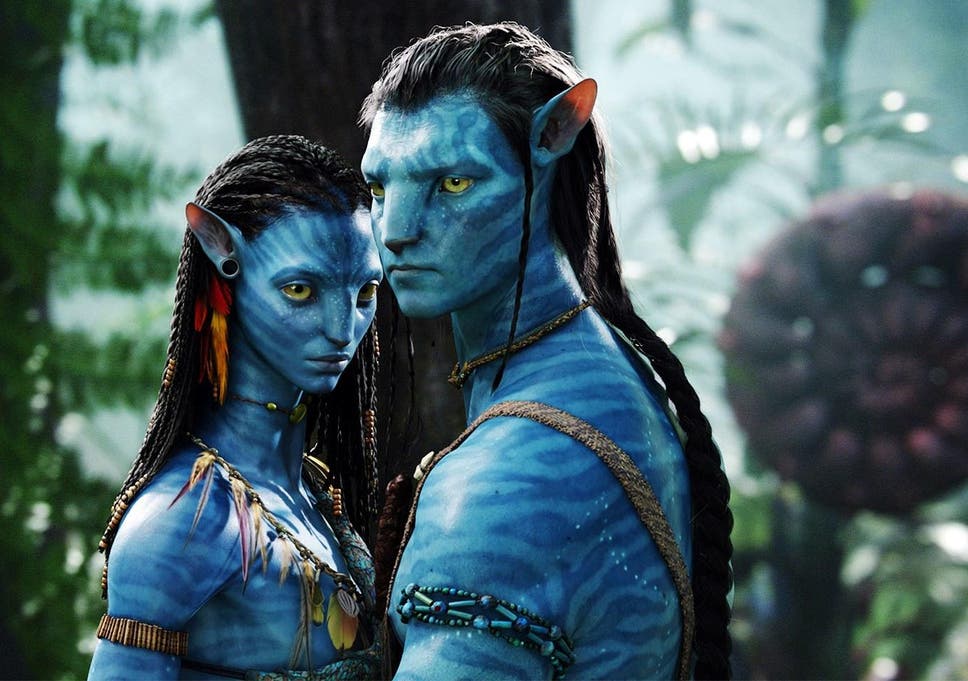
Frame Rates are the frequency at which consecutive images (known as frames), appear on a display. Since 1927, the standard frame rate for film has been 24 fps (frames per second). However, 24 fps is not the minimum required for persistence of vision as the human brain can make a continuous moving image with as little as 16 fps, but this mean that the effect filmmakers wanted was still given off in a much less expensive way (higher frame rates would require more film to be used.) Recently, there has been a move for higher frame rates to be utilized in modern films. This came to a head most notably in 2012 with the release of The Hobbit. Director Peter Jackson shot the film at 48 fps, which is twice the normal speed. Jackson did this as he said it made for a better viewing experience (especially in 3D), but the idea was still met with criticism. James Cameron, director of Avatar (2009), is also extremely enthusiastic about using different frame rates for the proposed Avatar sequel, as he believes that it will provide a much more engaging and realistic viewing experience. However many critics have argued that using higher frame rates in films will hinder the emotional value of films, and possibly make the films look too superficial. Image result for avatar

Thursday, 4 October 2018


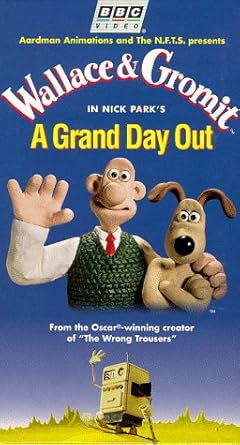
Stop Frame (A.K.A. Stop Motion Animation) is an animated film making technique in which objects are physically moved in extremely slight ways between individually photographed segments so that they will appear to be moving individually when played back at a fast sequence. Well known examples of this include Wallace and Gromit and Early Man, both products of the Aardman studio. The technology regarding stop motion has increased greatly over the three decades Wallace and Gromit has been around, with the differences between the show’s 1989 episodes and the much more polished episodes being greatly noticeable (more realistic looking animation, choppy editing etc.) Although various types of Stop Motion Animation look simple, the work that goes on behind them is complex. For example, Tim Burton’s 1993 film The Nightmare Before Christmas took three years to create at 24 fps. The completed film has around 110,000 frames, and more than 400 different heads were created were created for the character of Jack alone. Nick Park, creator of the Wallace and Gromit franchise, said he made the decision to not include a mouth on the face of the character Gromit when he could not reach past the character’s eyebrows to adjust the face. Park instead felt that a small eyebrow movement could have just as much effect on the character. Stop Motion Animation also caters to a more adult audience as well, the most notable example of this being Robot Chicken (2001-).
Image result for wallace and gromit vhs

Task 1- How do these techniques and early Pioneers impact on the future of stop motion?
Persistence of vision refers to an optical illusion that happens when the eye’s visual perception of an object does not stop for a period of time after the light coming from it have stopped entering the eye. By showing a series of images in quick, rapid succession, the viewer interprets them as a continuous moving image. Persistence of vision works as the human eye and the human brain can only process 10 to 12 separate images per second, keeping an image for up to a fifteenth of a second. If a different images replaces it in this period of time it will create the illusion of movement. Examples of this include the Phenakistoscope, which was a device that used images to create an illusion of fluid movement. It was marketed as a children’s toy and was extremely popular in it’s heyday. It was invented by Joseph Plateau in 1841, and consisted   The problem’s it presented where that it could only be used by one person at a time, unlike the Zoetrope and it successors. The Phenakistoscope has also influenced many animation techniques and devices even today, with the GIF working in an extremely similar way. While early designs were relatively simple, later versions of The Phenakistoscope included much more intricate and complex designs. Women danced and animals moved in short repeating animations.
Image result for phenakistoscope